Table of Contents
Introduction
Pandharpur Wari History and Tradition is one of the most important spiritual and cultural heritages of Maharashtra. Every year, lakhs of devotees known as Warkaris walk together for hundreds of kilometers to reach the sacred town of Pandharpur for the darshan of Lord Vitthal and Goddess Rukmini. The Wari pilgrimage is not only a religious journey but also a symbol of devotion, unity, discipline, equality, and spiritual faith. The spiritual atmosphere created during the Wari fills Maharashtra with bhajans, kirtans, abhangs, and chants of “Vitthal Vitthal Jai Hari Vitthal.”
The tradition of Pandharpur Wari has continued for several centuries and is deeply connected with Sant Dnyaneshwar Maharaj, Sant Tukaram Maharaj, and other saints of Maharashtra’s Bhakti movement. The Wari pilgrimage teaches devotees the values of simplicity, humanity, devotion, and selfless service. Today, Pandharpur Wari History and Tradition has become one of India’s largest and most respected spiritual pilgrimages attracting devotees from across the country.
What is Pandharpur Wari?
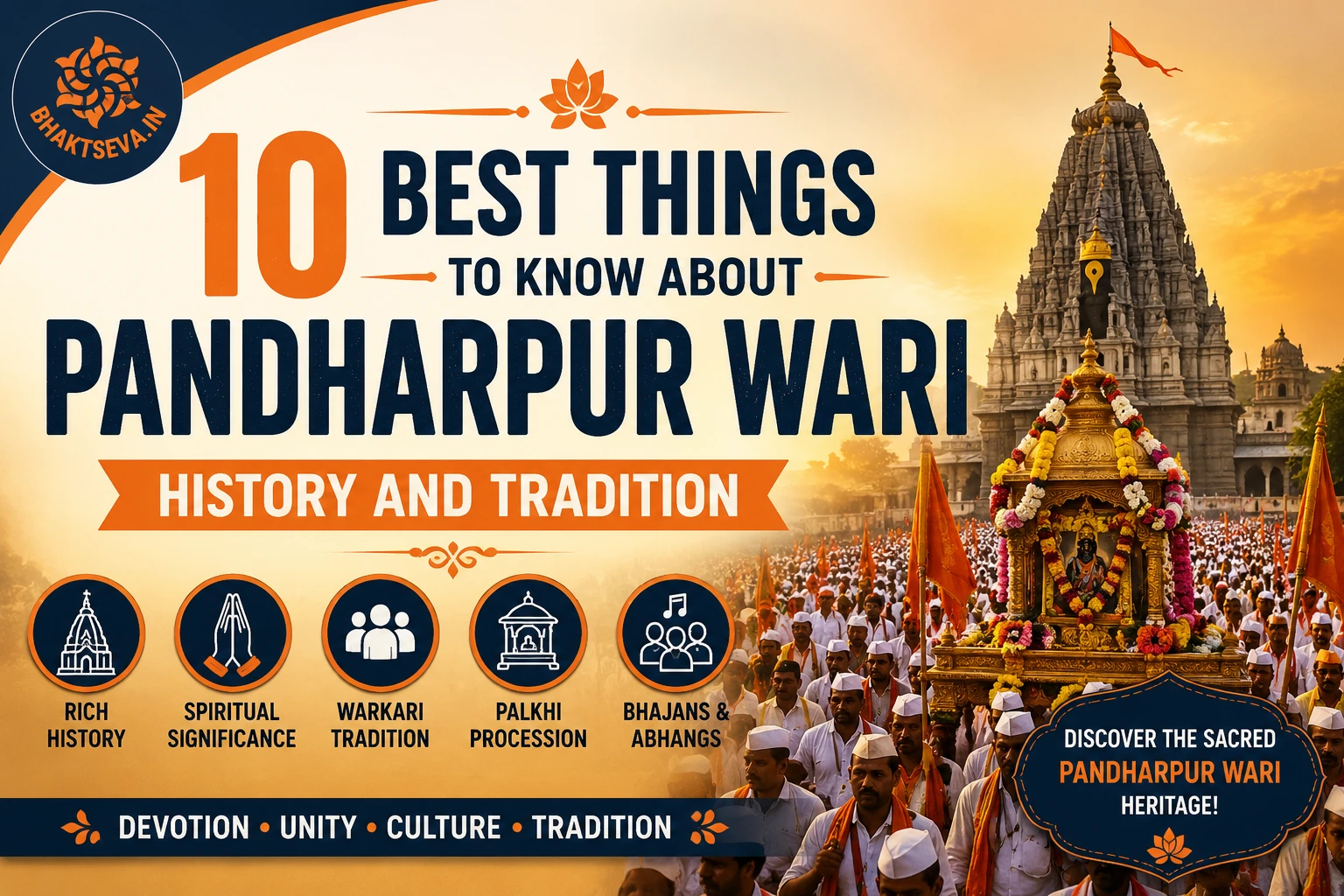
Pandharpur Wari History and Tradition revolves around the annual pilgrimage to Pandharpur, the holy town of Lord Vitthal. Warkaris travel by foot carrying palkhis (palanquins) of saints while singing devotional songs and abhangs throughout the journey.
The Wari mainly takes place during:
- Ashadhi Ekadashi
- Kartiki Ekadashi
During this pilgrimage, devotees from villages, towns, and cities walk together with great devotion to seek blessings from Lord Vitthal.
History of Pandharpur Wari
Ancient Spiritual Roots
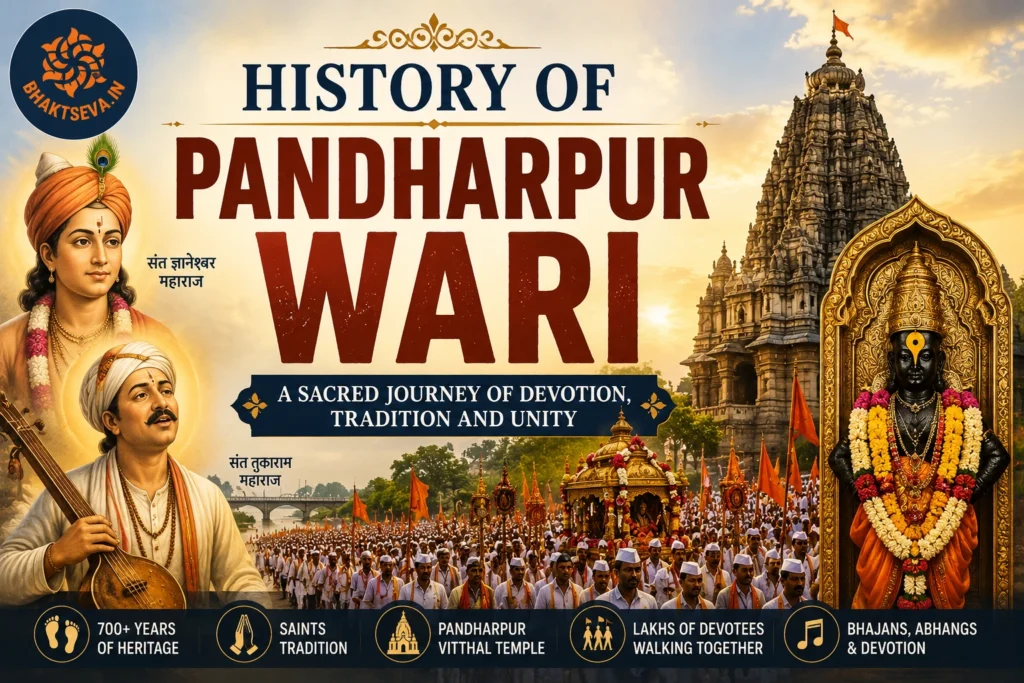
The roots of Pandharpur Wari History and Tradition are believed to be more than 700 years old. The pilgrimage became highly popular during the Bhakti movement in Maharashtra when saints spread messages of devotion and equality among people.
Pandharpur became an important spiritual center because of:
- Vitthal Temple
- Bhakti traditions
- Sant literature
- Devotional culture
The Wari tradition was strengthened by saints who encouraged people to worship God through devotion, prayers, bhajans, and service to humanity.
Role of Sant Dnyaneshwar Maharaj
Sant Dnyaneshwar Maharaj played a major role in shaping Pandharpur Wari History and Tradition. He spread spiritual teachings through the famous “Dnyaneshwari,” a Marathi explanation of the Bhagavad Gita.
Contributions of Sant Dnyaneshwar
- Promoted Bhakti movement
- Encouraged equality among devotees
- Inspired spiritual unity
- Strengthened Warkari culture
The palkhi of Sant Dnyaneshwar Maharaj starts from Alandi and travels towards Pandharpur during the Wari pilgrimage.
Role of Sant Tukaram Maharaj
Sant Tukaram Maharaj is another great saint associated with Pandharpur Wari History and Tradition. His abhangs and devotional songs continue to inspire millions of devotees.
Teachings of Sant Tukaram
- Devotion to Lord Vitthal
- Importance of simplicity
- Equality and humanity
- Spiritual discipline
The palkhi procession of Sant Tukaram Maharaj begins from Dehu and joins the Wari pilgrimage towards Pandharpur.
Importance of Lord Vitthal in Wari
Lord Vitthal, also known as Vithoba or Panduranga, is the central deity of Pandharpur Wari History and Tradition. Devotees believe Lord Vitthal blesses everyone equally regardless of caste, status, or background.
Why Devotees Worship Lord Vitthal
- Symbol of devotion and compassion
- Represents equality and love
- Spiritual protector of devotees
- Center of Warkari faith
The Vitthal Temple in Pandharpur becomes the final spiritual destination for lakhs of Warkaris during the pilgrimage.
Warkari Tradition in Maharashtra
The Warkari tradition is an important part of Pandharpur Wari History and Tradition. Warkaris follow spiritual discipline and devotional practices throughout their lives.
Main Principles of Warkari Tradition
- Chanting God’s name
- Simplicity in life
- Vegetarian lifestyle
- Equality among devotees
- Service to humanity
Warkaris wear traditional white clothes, tulsi malas, and Gandhi caps while participating in the pilgrimage.
Palkhi Tradition in Wari
The palkhi procession is one of the most beautiful parts of Pandharpur Wari History and Tradition.
What is a Palkhi?
A palkhi is a decorated palanquin carrying the symbolic padukas (footwear) of saints.
Famous Palkhis
- Sant Dnyaneshwar Maharaj Palkhi
- Sant Tukaram Maharaj Palkhi
Thousands of devotees walk together with palkhis while singing bhajans and abhangs.
Spiritual Atmosphere During Wari
The spiritual atmosphere created during Pandharpur Wari History and Tradition is truly extraordinary.
Spiritual Activities During Wari
- Bhajans
- Kirtans
- Abhang singing
- Ringan ceremonies
- Community prayers
Devotees experience peace, unity, and devotion throughout the pilgrimage journey.
Importance of Ashadhi Ekadashi
Ashadhi Ekadashi is the biggest festival associated with Pandharpur Wari History and Tradition.
Why Ashadhi Ekadashi is Important
- Main Wari pilgrimage day
- Lakhs of devotees gather in Pandharpur
- Special Vitthal darshan
- Spiritual celebrations across Maharashtra
The entire town of Pandharpur becomes filled with devotional energy during this festival.
Kartiki Wari Tradition
Apart from Ashadhi Wari, Kartiki Ekadashi is also important in Pandharpur Wari History and Tradition.
Features of Kartiki Wari
- Spiritual significance
- Large number of devotees
- Temple rituals and bhajans
- Peaceful devotional atmosphere
Many devotees participate in both Ashadhi and Kartiki Wari every year.
Discipline and Organization of Wari
One of the most respected aspects of Pandharpur Wari History and Tradition is its discipline and organization.
Organized Structure of Wari
- Dindi groups
- Scheduled travel routes
- Community meals
- Medical support
- Volunteer management
Despite lakhs of participants, the Wari is known for its peaceful and disciplined environment.
Dindi Tradition in Wari
Dindi groups are devotional groups traveling together during the Wari pilgrimage.
Activities of Dindi Groups
- Singing abhangs
- Group prayers
- Community discipline
- Spiritual discussions
The Dindi tradition strengthens unity and collective devotion among pilgrims.
Cultural Importance of Pandharpur Wari
Pandharpur Wari History and Tradition is not only a spiritual event but also a major cultural heritage of Maharashtra.
Cultural Elements of Wari
- Traditional music
- Folk art
- Marathi abhang literature
- Spiritual dance
- Warkari traditions
The Wari preserves Maharashtra’s devotional identity and cultural richness.
Social Message of Wari
The Wari pilgrimage spreads important social values.
Values Promoted by Wari
- Equality
- Brotherhood
- Simplicity
- Service
- Humanity
People from different communities walk together without discrimination during the pilgrimage.
Pandharpur Wari and Modern Times
Even in modern times, Pandharpur Wari History and Tradition continues to inspire millions of devotees.
Modern Facilities for Warkaris
- Medical camps
- Food distribution
- Online updates
- Transportation support
- Security arrangements
Technology and administration now help manage the large number of pilgrims during the Wari.
Pandharpur Wari for Young Generation
The younger generation is increasingly participating in Pandharpur Wari History and Tradition to stay connected with spirituality and Maharashtra’s cultural heritage.
Why Youth Join Wari
- Spiritual peace
- Cultural connection
- Fitness and discipline
- Devotional experience
Many young devotees now participate in Cycle Wari and organized pilgrimage tours.
Importance of Abhangs in Wari
Abhangs are devotional songs sung during the Wari pilgrimage.
Famous Saints Known for Abhangs
- Sant Tukaram Maharaj
- Sant Dnyaneshwar Maharaj
- Sant Namdev Maharaj
- Sant Eknath Maharaj
These spiritual songs create emotional devotion and positivity among Warkaris.
Economic Impact of Wari
Pandharpur Wari History and Tradition also supports local businesses and tourism.
Economic Benefits
- Hotel bookings
- Food services
- Local shopping
- Transportation
- Employment opportunities
Lakhs of pilgrims visiting Pandharpur contribute significantly to the local economy.
Conclusion
Pandharpur Wari History and Tradition is one of the oldest and most respected spiritual traditions in Maharashtra, representing devotion, equality, humanity, discipline, and strong faith in Lord Vitthal. For centuries, lakhs of Warkari devotees have participated in this sacred pilgrimage by walking together towards Pandharpur while singing bhajans, abhangs, and devotional chants dedicated to Lord Vitthal and Goddess Rukmini. The spiritual atmosphere created during the Wari fills the entire journey with positivity, peace, unity, and divine energy. The rich Pandharpur Wari History and Tradition is deeply connected with the teachings of Sant Dnyaneshwar Maharaj, Sant Tukaram Maharaj, Sant Namdev Maharaj, and many other saints who spread the message of devotion, equality, and selfless service through the Bhakti movement in Maharashtra.
The importance of Pandharpur Wari History and Tradition goes far beyond a simple pilgrimage because it teaches valuable life lessons about unity, simplicity, spirituality, and social harmony. During Ashadhi Wari and Kartiki Wari, devotees from different villages, cities, communities, and age groups walk together without discrimination while following the principles of the Warkari tradition. The palkhi processions, dindi groups, traditional rituals, community meals, spiritual discussions, and devotional songs create an unforgettable religious experience for every devotee. Millions of pilgrims participate in Pandharpur Wari History and Tradition every year to seek blessings, spiritual peace, emotional strength, and a deeper connection with Lord Vitthal.
Even in modern times, Pandharpur Wari History and Tradition continues to inspire younger generations and spiritual travelers from across India. The Wari pilgrimage has become a symbol of Maharashtra’s devotional culture and cultural heritage that combines spirituality with discipline and community participation. Whether devotees participate in the traditional walking Wari, Cycle Wari, or organized pilgrimage tours, the sacred journey to Pandharpur remains a life-changing spiritual experience filled with devotion, faith, and divine blessings. The eternal tradition of walking towards Pandharpur while chanting the name of Lord Vitthal keeps the spiritual legacy of Maharashtra alive for future generations and continues to strengthen the bond between devotees and God.
Devotees interested in learning more about Pandharpur Wari History and Tradition can also explore Maharashtra pilgrimage tourism through Maharashtra Tourism and official temple updates from Shri Vitthal Rukmini Mandir. Pilgrims planning spiritual tours can also read our detailed guides on Top Spiritual Destinations in Maharashtra and Best Group Tour Packages for Devotees to plan a peaceful devotional journey across Maharashtra.
Devotees planning a spiritual journey to Pandharpur and learning more about Pandharpur Wari History and Tradition can also read our detailed guides on Pandharpur Cycle Wari 2026 Registration Guide and Top Spiritual Destinations in Maharashtra for better pilgrimage planning. Families and group travelers interested in Pandharpur Wari History and Tradition can also explore Best Group Tour Packages for Devotees to enjoy organized Maharashtra temple tours, Wari pilgrimage experiences, and devotional travel services.
Frequently Asked Questions.
1. What is Pandharpur Wari History and Tradition?
Pandharpur Wari History and Tradition refers to the centuries-old pilgrimage where Warkari devotees walk to Pandharpur for Lord Vitthal darshan during Ashadhi and Kartiki Ekadashi.
2. Who started the Pandharpur Wari tradition?
The Wari tradition became popular through saints like Sant Dnyaneshwar Maharaj and Sant Tukaram Maharaj who promoted devotion and equality through the Bhakti movement.
3. Why is Ashadhi Ekadashi important in Pandharpur Wari?
Ashadhi Ekadashi is the main festival of Pandharpur Wari History and Tradition when lakhs of devotees gather in Pandharpur for Vitthal darshan and spiritual celebrations.
4. What is the meaning of Palkhi in Wari?
A palkhi is a decorated palanquin carrying the symbolic padukas of saints during the Wari pilgrimage.
5. Why do devotees participate in Pandharpur Wari?
Devotees participate in Pandharpur Wari History and Tradition for spiritual peace, devotion to Lord Vitthal, community unity, and the experience of Maharashtra’s rich devotional culture.