Table of Contents
Introduction
Spiritual Tourism India has become one of the fastest-growing travel sectors because millions of people now seek peace, positivity, devotion, and spiritual healing through pilgrimage journeys and temple tourism. India is known worldwide for its ancient temples, sacred rivers, spiritual traditions, yoga culture, meditation centers, and holy pilgrimage destinations. From the holy town of Varanasi to the peaceful temples of Pandharpur, Tirupati, Kedarnath, Shirdi, and Rameshwaram, spiritual tourism connects devotees with faith, culture, and inner peace.
Unlike regular tourism, Spiritual Tourism India focuses on emotional well-being, spiritual growth, devotion, meditation, and cultural experiences. Devotees travel to sacred destinations not only for temple darshan but also to experience spiritual energy, traditional rituals, devotional music, festivals, and peaceful environments. Spiritual tourism has become popular among families, senior citizens, international tourists, and young travelers who want to experience India’s rich spiritual heritage.
India’s spiritual culture is deeply connected with saints, temples, yoga, Ayurveda, pilgrimage routes, and religious traditions followed for thousands of years. Every year, millions of pilgrims participate in yatras, temple festivals, poojas, meditation camps, and spiritual gatherings across the country. Spiritual Tourism India continues to grow because it provides emotional satisfaction, cultural understanding, relaxation, and positive life experiences.
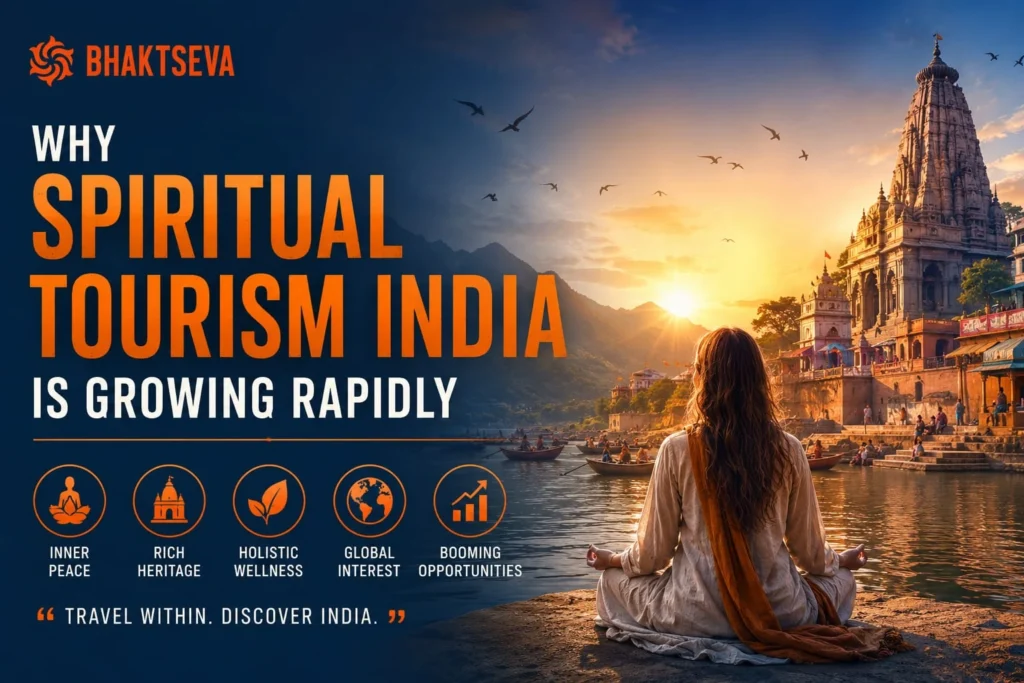
Why Spiritual Tourism India is Growing Rapidly
Ancient Spiritual Heritage
India is home to some of the oldest spiritual traditions in the world. Ancient temples, pilgrimage sites, ashrams, monasteries, and sacred rivers attract devotees and spiritual travelers from across the globe.
Search for Inner Peace
Modern lifestyles often create stress and mental pressure. Many travelers now choose Spiritual Tourism India to experience peace, meditation, yoga, and spiritual relaxation away from busy city life.
Rich Temple Culture
India has thousands of famous temples dedicated to Lord Shiva, Lord Vishnu, Goddess Durga, Sai Baba, Lord Krishna, and many other deities. Temple tourism plays a major role in India’s spiritual travel industry.
Improved Travel Facilities
Better roads, hotels, transportation, online darshan booking, and pilgrimage tour packages have made spiritual tourism more accessible and comfortable for devotees.
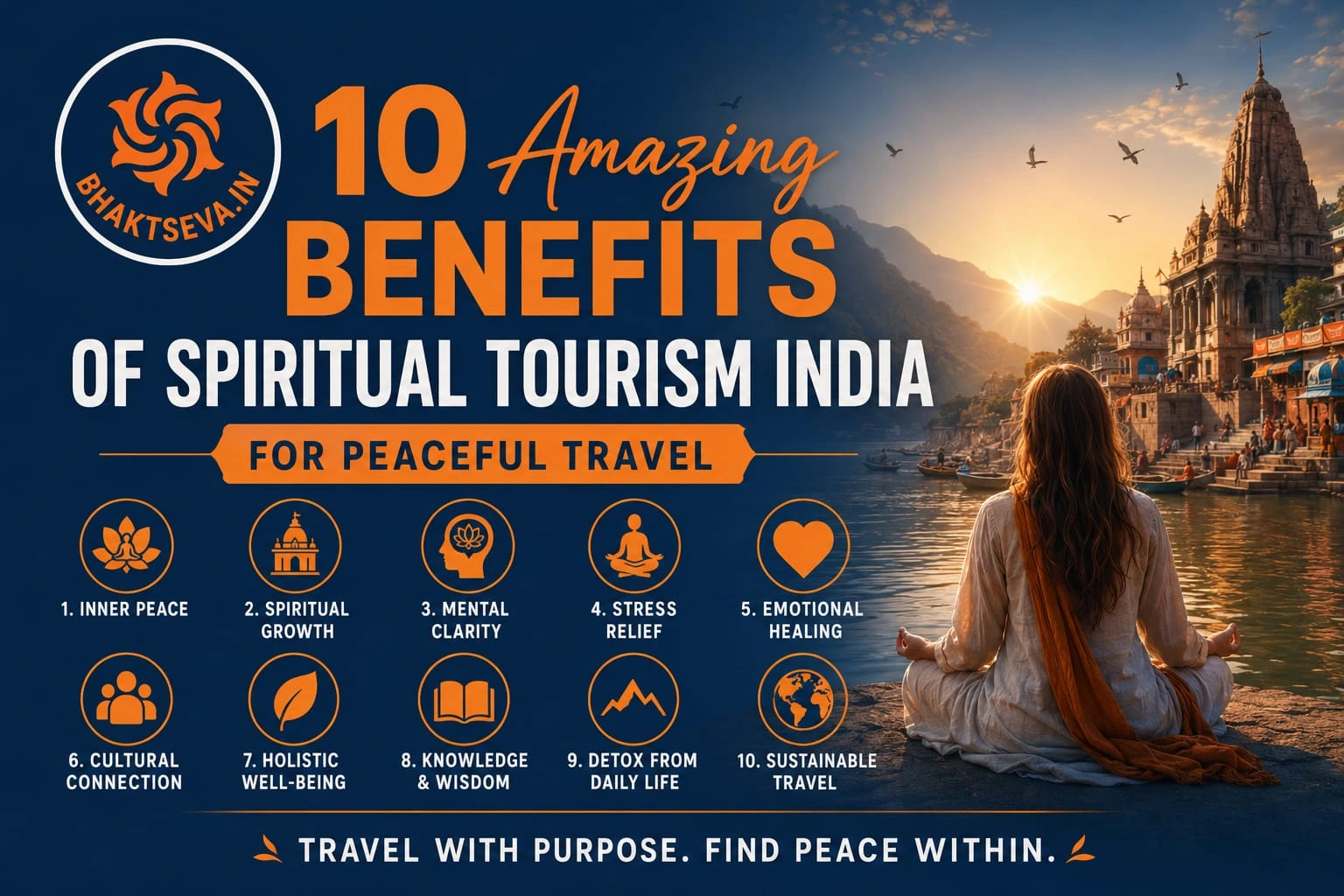
1. Spiritual Peace and Mental Relaxation
One of the biggest benefits of Spiritual Tourism India is mental peace and emotional relaxation. Visiting sacred temples, meditation centers, and spiritual destinations helps devotees feel calm, positive, and spiritually connected.
Many pilgrims experience emotional healing through:
- Temple darshan
- Bhajans and kirtans
- Meditation sessions
- Yoga practices
- Spiritual discourses
- River rituals and poojas
The peaceful atmosphere of pilgrimage destinations helps reduce stress, anxiety, and negative thoughts.
2. Connection with India’s Ancient Culture
Spiritual Tourism India allows travelers to experience India’s rich cultural and religious heritage. Every pilgrimage destination has unique traditions, rituals, architecture, festivals, and devotional practices.
Popular cultural experiences include:
- Temple festivals
- Traditional music and dance
- Religious processions
- Spiritual storytelling
- Ancient rituals
- Devotional food traditions
Travelers gain a deeper understanding of Indian spirituality and devotional culture through these experiences.
3. Promotion of Temple Tourism
Temple tourism is one of the strongest pillars of Spiritual Tourism India. Famous temples attract millions of devotees every year and contribute significantly to local economies and tourism growth.
Popular temple destinations include:
- Varanasi
- Tirupati
- Shirdi
- Pandharpur
- Kedarnath
- Badrinath
- Rameshwaram
- Jagannath Puri
- Vaishno Devi
- Somnath
These sacred places offer spiritual experiences along with historical and architectural importance.
4. Growth of Pilgrimage Tourism
Pilgrimage tourism has become highly organized in India. Many travel companies now provide customized pilgrimage tours, darshan booking, accommodation, Satvik food, and local transportation.
Spiritual Tourism India supports:
- Family pilgrimage tours
- Group yatras
- Senior citizen tours
- Temple circuits
- Religious festivals
- Spiritual retreats
Pilgrimage tourism strengthens faith and creates unforgettable devotional memories.
5. Economic Benefits for Local Communities
Another major advantage of Spiritual Tourism India is economic growth for local communities near pilgrimage destinations. Millions of pilgrims support small businesses, hotels, restaurants, transport services, local guides, flower sellers, and artisans.
Spiritual tourism creates employment opportunities in:
- Hotels and accommodation
- Travel services
- Restaurants and food stalls
- Local shopping markets
- Temple services
- Religious product businesses
This improves local income and supports traditional livelihoods.
6. Encouragement of Yoga and Meditation Tourism
India is globally famous for yoga and meditation. Many international travelers visit India specifically for spiritual retreats, yoga programs, Ayurveda therapies, and meditation camps.
Popular spiritual wellness destinations include:
- Rishikesh
- Haridwar
- Kerala
- Varanasi
- Dharamshala
- Auroville
Spiritual Tourism India promotes healthy lifestyles, mindfulness, mental balance, and emotional healing through yoga and meditation practices.
7. Strengthening Family and Social Bonds
Spiritual journeys often bring families and communities together. Traveling together for temple darshan, yatras, and religious festivals strengthens emotional bonding and shared spiritual experiences.
Family pilgrimage tours help:
- Create positive memories
- Teach cultural values to children
- Encourage devotion and discipline
- Improve family relationships
Group spiritual travel creates unity and positive social interaction among devotees.
8. Preservation of Ancient Traditions
Spiritual Tourism India helps preserve India’s ancient religious traditions, temple rituals, devotional music, folk art, and cultural heritage.
Pilgrimage tourism supports:
- Traditional festivals
- Temple architecture
- Classical devotional music
- Warkari traditions
- Religious literature
- Handcrafted spiritual products
This preservation helps future generations remain connected with Indian spirituality and culture.
9. Development of Infrastructure
The growth of Spiritual Tourism India has improved infrastructure near pilgrimage destinations. Governments and tourism departments invest in roads, railway connectivity, airports, sanitation, accommodation, and safety facilities.
Improved infrastructure benefits:
- Pilgrims
- Local residents
- Businesses
- Tourism operators
Better travel facilities encourage more devotees to participate in spiritual tourism.
10. Promotion of Eco and Rural Tourism
Many spiritual destinations are located in villages, mountains, forests, and riverbanks. Spiritual tourism encourages eco-tourism and rural tourism by attracting visitors to peaceful natural environments.
Devotees enjoy:
- River ghats
- Mountain temples
- Village traditions
- Nature walks
- Spiritual retreats
This creates balanced tourism development while promoting environmental awareness.
Famous Spiritual Tourism Destinations in India
Varanasi
One of the world’s oldest spiritual cities located on the banks of the Ganga River.
Tirupati
Famous for Lord Venkateswara Temple and one of the most visited pilgrimage sites in the world.
Pandharpur
Known for Lord Vitthal Temple and the famous Wari pilgrimage tradition.
Shirdi
Spiritual destination associated with Sai Baba.
Kedarnath and Badrinath
Popular Himalayan pilgrimage destinations dedicated to Lord Shiva and Lord Vishnu.
Rameshwaram
Sacred Jyotirlinga temple and important Char Dham pilgrimage destination.
Best Time for Spiritual Tourism India
The best time depends on the destination and festival season. Popular spiritual travel seasons include:
- October to March
- Ashadhi Ekadashi
- Navratri
- Mahashivratri
- Guru Purnima
- Kartiki Ekadashi
- Diwali season
Festival periods provide vibrant spiritual experiences and devotional celebrations.
Tips for Spiritual Tourism India
Plan Early
Book hotels and transportation in advance during festival seasons.
Respect Local Traditions
Follow temple rules, dress codes, and spiritual customs.
Choose Trusted Travel Services
Select reliable pilgrimage tour providers for better comfort and safety.
Carry Essential Items
Keep medicines, identity proof, comfortable footwear, and travel essentials.
Stay Spiritually Focused
Participate in bhajans, poojas, meditation, and temple rituals for a meaningful experience.
Conclusion
Spiritual Tourism India is much more than religious travel because it connects people with faith, culture, peace, devotion, and emotional healing. From ancient temples and sacred rivers to yoga retreats and pilgrimage festivals, India offers unforgettable spiritual experiences for devotees and travelers from around the world. Spiritual tourism not only strengthens inner peace and spiritual growth but also supports local economies, preserves cultural traditions, and promotes positive lifestyles.
Whether you are planning a temple tour, meditation retreat, family pilgrimage, or spiritual journey with friends, Spiritual Tourism India provides meaningful experiences that combine devotion, travel, wellness, and cultural exploration together. The growing popularity of spiritual tourism proves that people continue to seek peace, spirituality, and deeper connections in today’s fast-moving world.
Devotees and travelers interested in Spiritual Tourism India can explore official spiritual travel information through Incredible India Spiritual Tourism and Maharashtra Tourism to learn more about India’s famous pilgrimage destinations and spiritual experiences. Readers planning Maharashtra temple tours can also explore our detailed guides on Top Spiritual Destinations in Maharashtra and Pandharpur Wari History and Tradition for better pilgrimage planning. Families and group travelers can additionally check Best Group Tour Packages for Devotees to enjoy organized spiritual journeys, temple darshan services, and devotional travel experiences across India.
Frequently Asked Questions
1. What is Spiritual Tourism India?
Spiritual Tourism India refers to travel focused on temples, pilgrimage destinations, yoga centers, meditation retreats, and spiritual experiences across India.
2. Why is Spiritual Tourism India popular?
Spiritual Tourism India is popular because India has ancient temples, sacred rivers, spiritual traditions, yoga culture, and famous pilgrimage destinations visited by millions of devotees.
3. Which are the most famous spiritual destinations in India?
Popular destinations include Varanasi, Tirupati, Shirdi, Pandharpur, Kedarnath, Rameshwaram, Haridwar, and Vaishno Devi.
4. What are the benefits of Spiritual Tourism India?
Benefits include mental peace, spiritual growth, cultural experiences, family bonding, emotional healing, and exposure to India’s rich devotional traditions.
5. What is the best time for Spiritual Tourism India?
The best time for Spiritual Tourism India is from October to March when the weather is pleasant and comfortable for pilgrimage travel. Major spiritual festivals like Navratri, Mahashivratri, Guru Purnima, and Ashadhi Ekadashi also offer vibrant devotional experiences, temple celebrations, spiritual gatherings, and peaceful religious journeys across India.